Audio Projects (AUD430)
AUD430 - ‘Audio Projects’ provides students with an immersive learning experience, combining theoretical knowledge with practical application in various areas of audio production. By engaging in hands-on investigations, and critical analysis, students will develop the skills and confidence to pursue diverse opportunities within the creative industries, contributing to the ever-evolving landscape of audio innovation and expression.
Investigation 1: Working Outside of Comfort Zone
Research Question: How can soundscape composition be used to challenge conventional emotional associations with sound and evoke contrasting psychological responses in listeners?
Proposal
This investigation explores how soundscape composition can be used to influence emotional responses by deliberately reversing my established creative approach. My original composition, created for Silence of Sound Studios, incorporated natural environmental recordings, gentle ocean waves, birdsong and harmonious atmospheric pads to encourage relaxation and emotional well-being.
For this investigation, I aim to recreate the soundscape with the opposite emotional intention, producing an unnatural, unsettling and potentially uncomfortable listening experience. Rather than introducing unfamiliar software, I will challenge my habitual compositional methodology by reconsidering how I select, arrange and combine sounds.
Using Ableton Live, I will replace the original calming elements with dissonant synthesiser pads, electrical interference, mechanical buzzing and darker environmental textures. I will also retain some recognisable natural sounds to explore how their emotional characteristics might change when presented within an unfamiliar sonic environment.
My hypothesis is that the emotional qualities associated with individual sounds are influenced by their surrounding sonic context and compositional arrangement. For example, water droplets that might ordinarily be perceived as calming could become unsettling when layered with mechanical noises and dissonant frequencies.
As my creative practice predominantly focuses on the therapeutic potential of sound, deliberately producing an uncomfortable listening experience challenges my established artistic intentions.
Ultimately, this investigation aims to explore how changing the intended emotional outcome of a composition influences my creative decisions, and whether working against familiar aesthetic preferences can expand my understanding of sound design and auditory perception.
Research
My research focuses on how soundscape composition influences emotional perception, particularly through the relationship between natural and artificial sounds, sonic context and compositional intention.
Schafer (1994), in The Soundscape: Our Sonic Environment and the Tuning of the World, examines how natural, industrial and technological sounds shape our acoustic environments. His work provides a foundation for considering how different sound sources contribute to the character of a listening environment. This informed my decision to contrast organic recordings with mechanical and electrical textures.
Truax (2002) discusses soundscape composition as a creative practice involving the organisation and transformation of environmental recordings. His research highlights how sound can communicate meaning through its relationship with other sonic elements. This is particularly relevant to my investigation, as I am exploring how familiar environmental sounds might acquire different emotional associations through contrasting arrangements.
Jeon et al. (2011) examine how non-auditory factors contribute to soundscape evaluation, demonstrating the importance of context in how acoustic environments are perceived. This supports my hypothesis that emotional responses are not determined solely by individual sounds but may also be influenced by their presentation and surrounding environment.
Additionally, Juslin and Västfjäll (2008) identify psychological mechanisms involved in emotional responses to music, providing further insight into how auditory experiences can evoke different emotional states.
Together, these perspectives inform my alternative compositional methodology. Rather than prioritising harmony and relaxation, I am investigating how dissonance, mechanical repetition and contrasting sonic textures can be intentionally arranged to encourage tension and unease.
Process
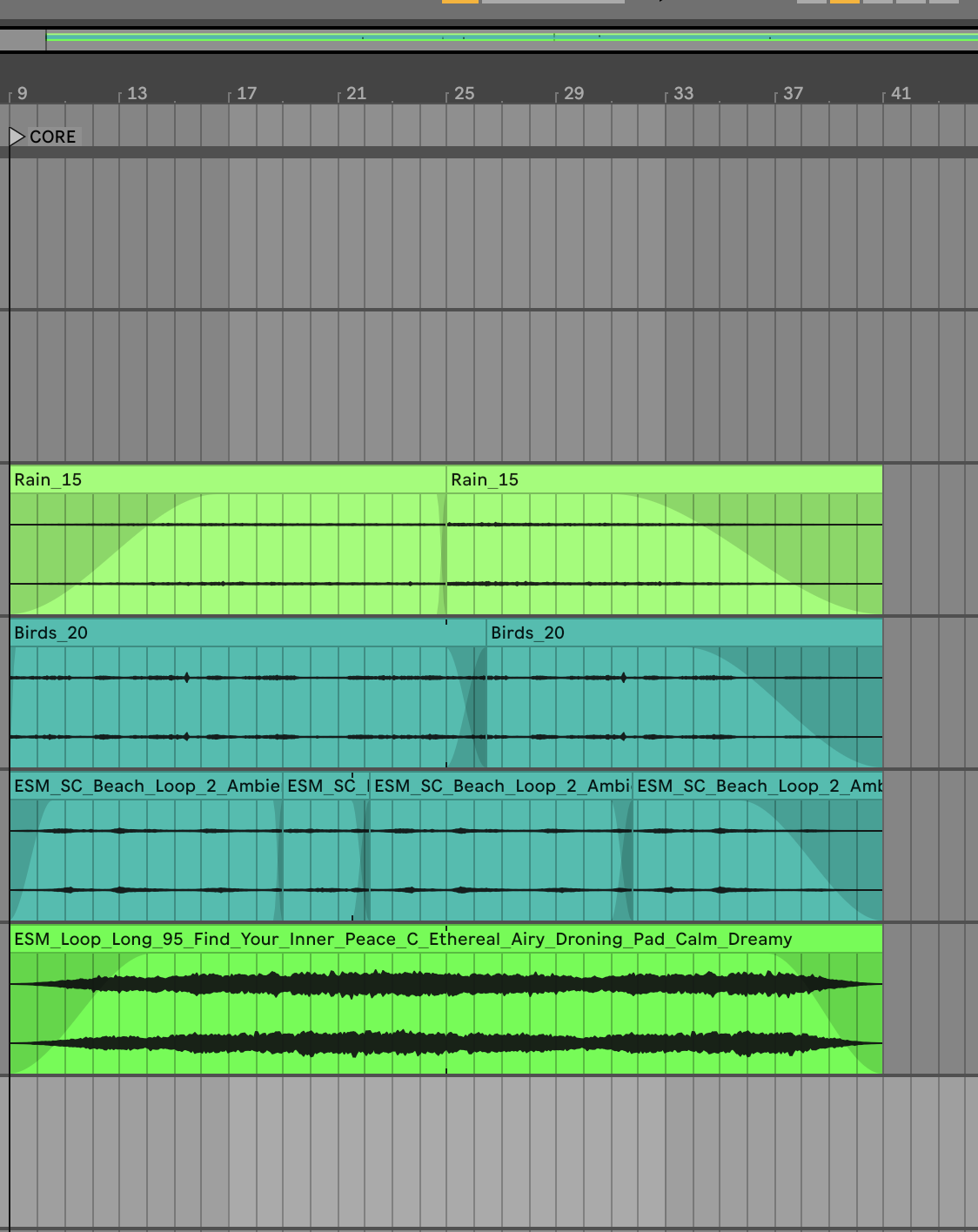
I began by reviewing my original Silence of Sound composition and identifying the sonic characteristics that contributed to its intended relaxing atmosphere. The soundscape featured gentle ocean waves, birdsong and a dreamy, sustained synthesiser pad. My original production approach prioritised harmonious layering, smooth transitions and a cohesive natural environment.
To challenge this methodology, I began reconstructing the soundscape in Ableton Live with the deliberate intention of creating an opposing emotional experience.
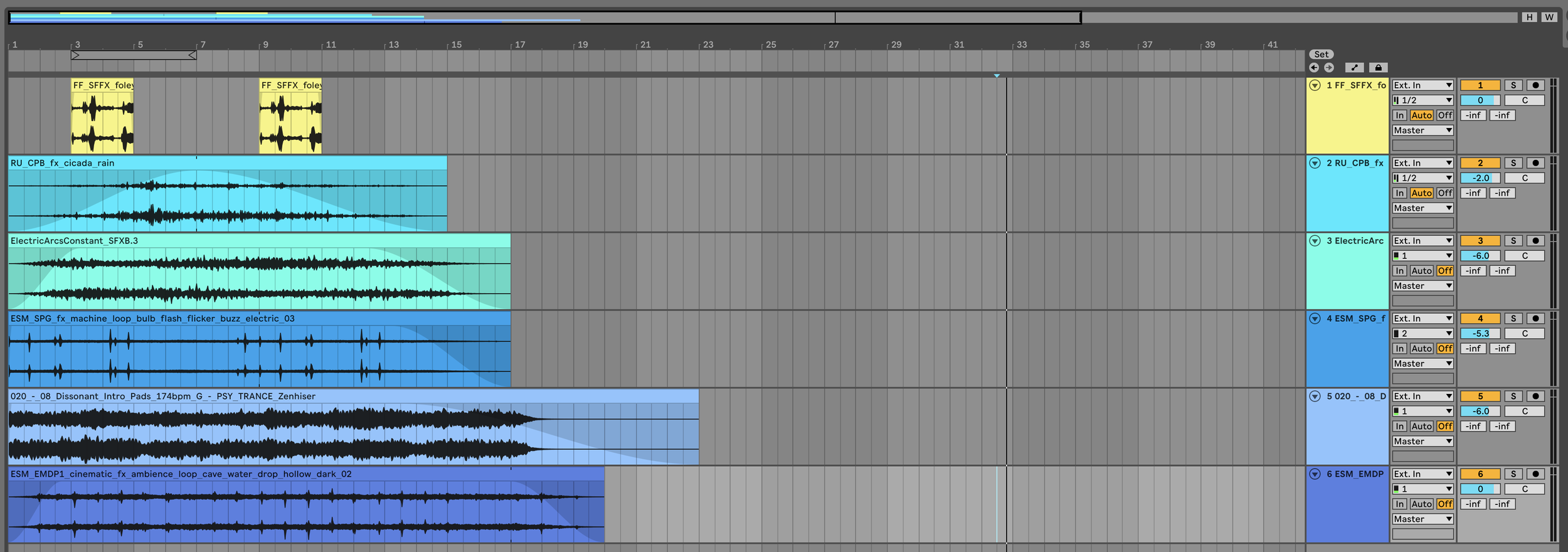
I selected six audio samples based on their contrasting sonic characteristics. A dissonant synthesiser pad replaced the original harmonious drone, establishing a darker and more unstable harmonic foundation. I then introduced recordings of electrical arcs and a flickering electrical mechanism, adding mechanical buzzing, repetition and irregular textures.
A science-fiction-inspired computer noise sample introduced another artificial element, further distancing the composition from the organic qualities of the original recording.
Interestingly, I also incorporated cicada rain and hollow cave water droplets. Although these sounds originate from natural environments, I wanted to investigate how their perceived emotional characteristics might change when layered with artificial and dissonant sounds.
The production process involved importing, arranging and layering these recordings within Ableton Live, considering how each element contributed to the intended emotional atmosphere.
The primary experimental technique was the reversal of my usual compositional decision-making. Instead of selecting sounds based on their potential to create relaxation, I evaluated their capacity to introduce tension, unfamiliarity and discomfort.
One challenge was reconsidering my instinctive preference for harmonious, cohesive textures. This required approaching sound selection from a different creative perspective rather than relying on my established aesthetic preferences.
The process highlighted how creative intention influences production decisions, even when working within familiar software.
Conclusion and Reflection
This investigation challenged my established approach to soundscape composition by reversing the emotional intention behind my creative decisions.
My original Silence of Sound composition prioritised relaxation through harmonious textures and recognisable natural environments. In contrast, the reconstructed soundscape combined dissonance, electrical interference, mechanical repetition and darker environmental recordings to create an atmosphere intended to evoke discomfort and unease.
One of the most interesting discoveries was recognising that the emotional character of a sound is not necessarily fixed. Natural recordings such as cicadas and water droplets can take on different qualities depending on the surrounding sonic environment.
Working against my usual creative intentions also encouraged me to question how personal aesthetic preferences influence my production choices. Although Ableton Live remained my primary production software, changing my compositional methodology provided an opportunity to approach familiar tools differently.
This experience reinforced the idea that creative limitations do not always originate from technology itself, but can emerge from the habits and expectations we develop when using it.
Moving forward, I intend to incorporate more experimental approaches to emotional sound design into my practice. Exploring contrasting emotional experiences may also deepen my understanding of the relationship between sound, perception and well-being.
References
Jeon, J. Y., Lee, P. J., You, J., & Kang, J. (2011). Non-auditory factors affecting urban soundscape evaluation. The Journal of the Acoustical Society of America, 130(6), 3761–3770.
Juslin, P. N., & Västfjäll, D. (2008). Emotional responses to music: The need to consider underlying mechanisms. Behavioral and Brain Sciences, 31(5), 559–575.
Schafer, R. M. (1994). The soundscape: Our sonic environment and the tuning of the world. Destiny Books. (Original work published 1977)
Truax, B. (2002). Genres and techniques of soundscape composition as developed at Simon Fraser University. Organised Sound, 7(1), 5–14.
Original Soundscape for Silence of Sound Studios
Sonic Contrast Experiment (AUD430.1)
PROMPT 1
PROMPT 2
PROMPT 3
Investigation 2: Emerging Technology
Research Question: To what extent can generative artificial intelligence contribute to music production while preserving human creative control, artistic authorship and authentic expression?
Proposal
This investigation explores the role of generative artificial intelligence in contemporary music production, focusing on its implications for human creativity, artistic authorship and ethical practice. I chose to experiment with Stable Audio, an AI-powered platform that generates musical compositions through text-based prompts.
My decision stems from an ongoing curiosity and uncertainty surrounding AI-generated art. As a creative practitioner, I believe human-made art holds inherent value beyond its final product. Artistic expression is shaped by lived experience, emotional understanding, cultural context and individual intention. I remain sceptical about whether AI-generated music can possess the same artistic significance.
However, I recognise that artificial intelligence is becoming increasingly embedded within creative industries. Rather than dismissing or endorsing the technology without practical experience, I wanted to critically investigate its capabilities and limitations.
My central research question asks whether generative AI can function as a legitimate creative tool without diminishing human authorship and artistic expression.
I hypothesised that while AI could generate technically convincing musical compositions, meaningful artistic authorship would remain dependent on human intention, creative judgement and decision-making.
Through Stable Audio, I aimed to compare AI-led generation with increasingly detailed human-directed prompting, evaluating how much creative control I retained throughout the process.
Ultimately, this investigation seeks to develop a more informed personal position on AI music production, particularly where the balance lies between technological assistance and creative replacement. My intention is not to advocate for AI-generated art, but to understand whether it can be incorporated into creative practice without compromising the values I associate with human expression.
Research
My research examined artificial intelligence as both a creative tool and a challenge to traditional understandings of artistic authorship.
Boden (1998) explored the relationship between creativity and artificial intelligence, identifying how computational systems could generate novel combinations, explore conceptual possibilities and transform existing ideas. Her research raised questions about whether producing original material necessarily constituted creativity, particularly when distinguishing between generating ideas and evaluating their artistic significance.
Huang et al. (2020) investigated human–AI collaboration in songwriting, examining how musicians interacted with generative technologies. Their findings identified challenges surrounding creative control, particularly when AI systems produced results that were difficult to direct or predict. This was relevant to my investigation because I wanted to understand whether prompting an AI constituted meaningful creative participation or primarily involved selecting from machine-generated possibilities.
The U.S. Copyright Office (2025) further complicated questions of authorship by distinguishing between human creative contributions and material generated autonomously by artificial intelligence. Its findings suggested that human involvement in directing, arranging or modifying AI outputs could be significant, although prompting alone did not necessarily establish copyrightable authorship under US law.
Stable Audio's documentation (Stability AI, n.d.) provided technical guidance on generating compositions through prompts and refining outputs using its production interface.
Together, these sources informed my investigation into the ethical and creative boundaries of generative AI. While the technology offered new opportunities for experimentation and accessibility, questions remained surrounding artistic ownership, creative labour and the value of human expression.
My research encouraged me to approach the technology critically rather than assuming that technological innovation automatically represented artistic progress.
Process
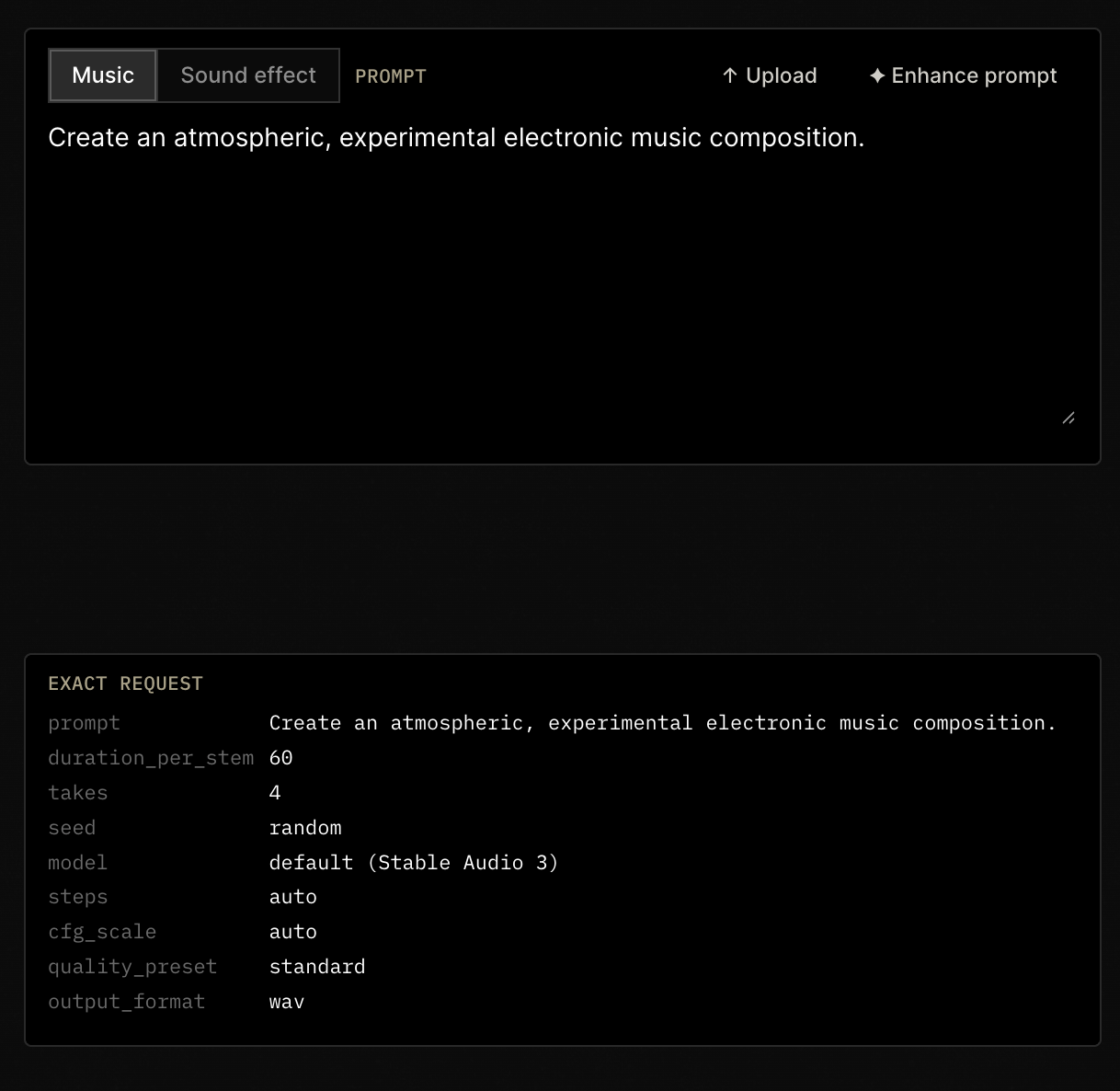
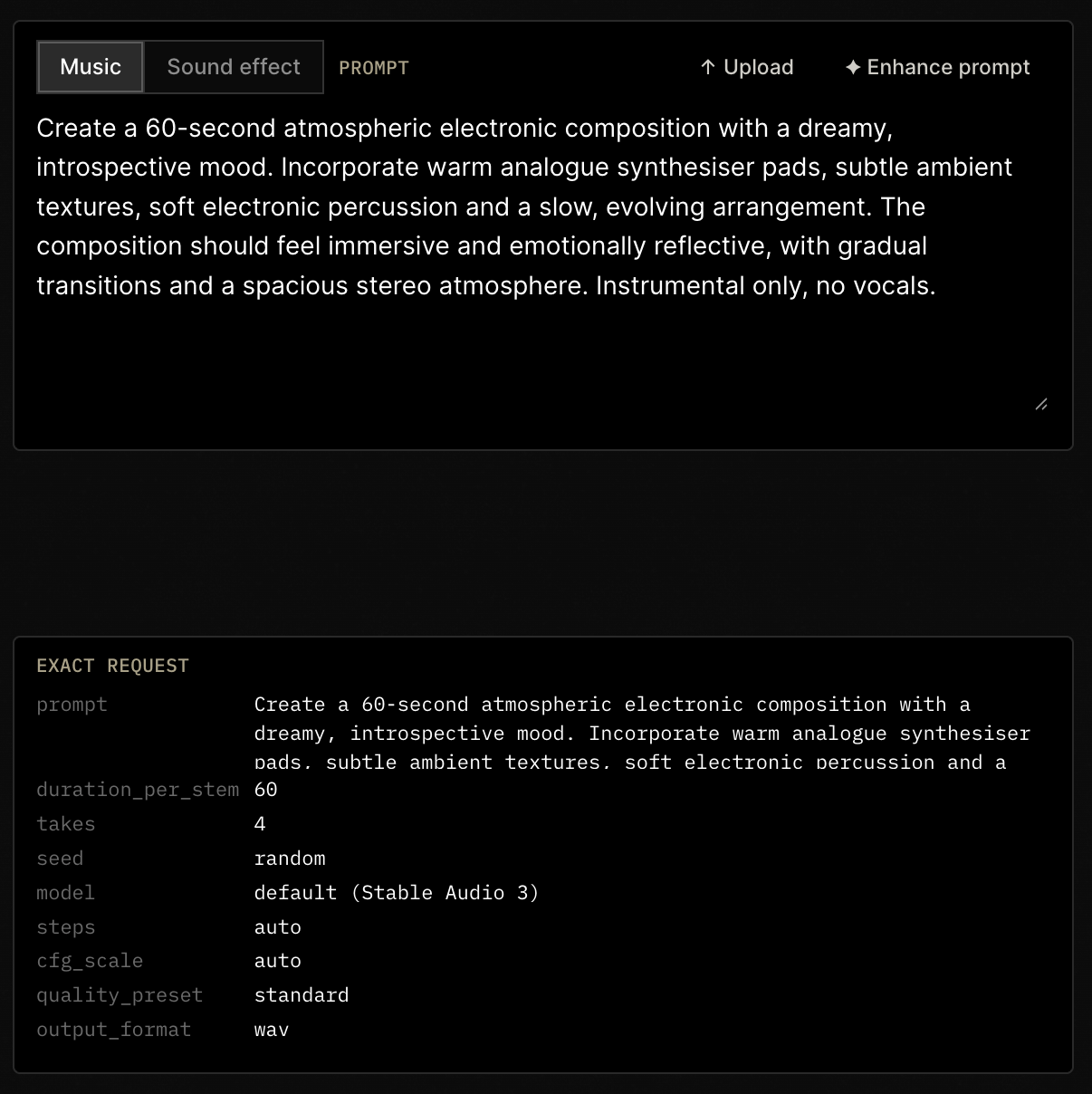
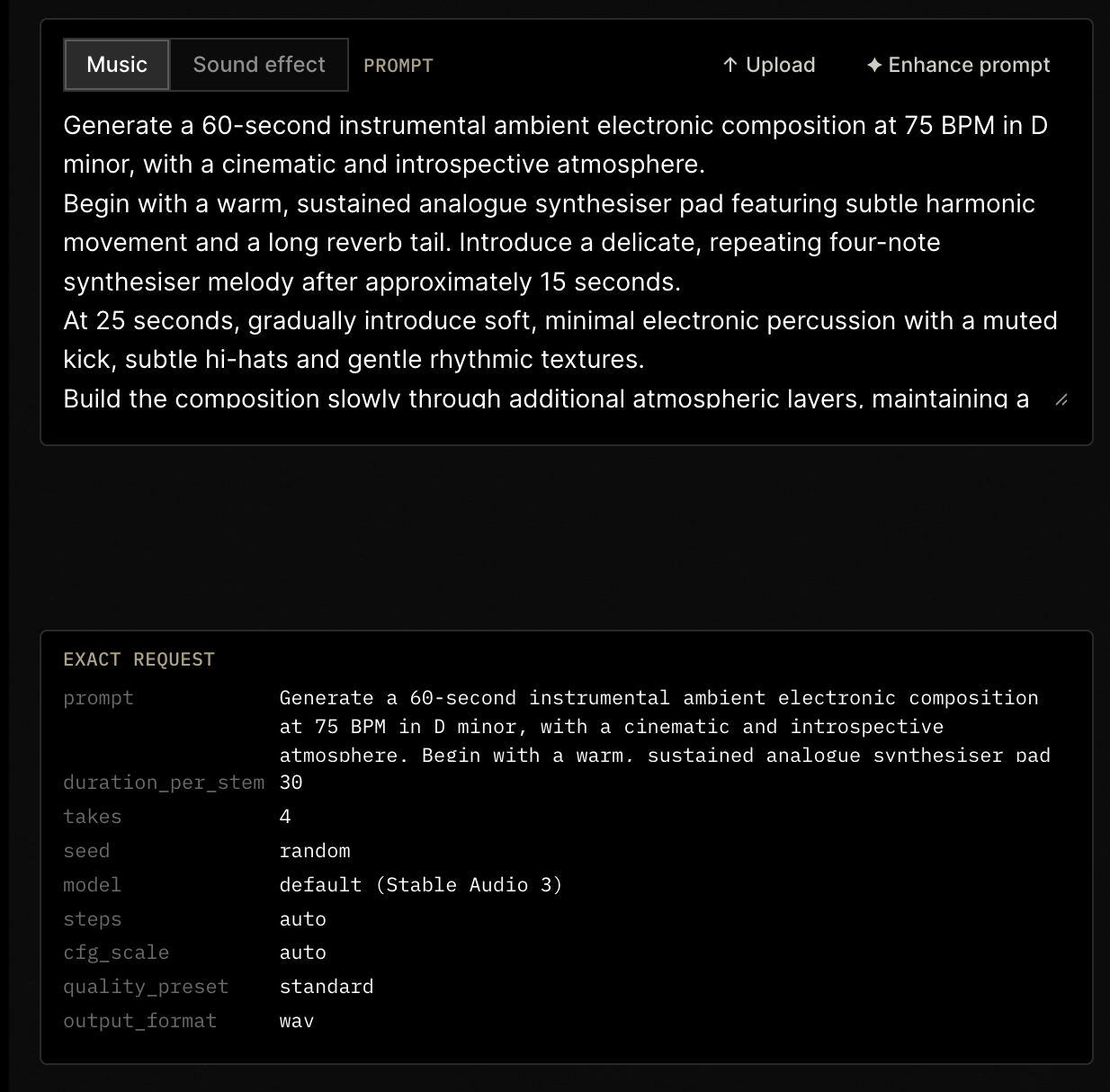
For this investigation, I used Stable Audio to generate experimental electronic compositions through three progressively detailed text prompts. Each prompt produced four variations, allowing me to compare twelve AI-generated tracks and evaluate how different levels of human direction influenced the results.
Experiment 1: AI-led creation
My initial prompt was deliberately broad, requesting an atmospheric, experimental electronic composition without specifying instrumentation, tempo or structure. The four generated tracks were noticeably different, demonstrating how widely AI could interpret the same instructions. Although the compositions were reasonably coherent, I found them somewhat generic, lacking emotional depth or originality. They sounded similar to what I had anticipated AI-generated music would produce.
Experiment 2: Human-directed creation
For the second experiment, I introduced more specific instructions, including warm analogue synthesiser pads, subtle percussion, atmospheric textures and a dreamy, introspective mood. Surprisingly, these were my favourite results. Unlike the first experiment, the four variations were relatively consistent, with subtle differences between compositions. I was genuinely surprised to enjoy the generated music, challenging my initial expectations about AI's creative capabilities.
Experiment 3: Highly directed creation
My final prompt included precise instructions regarding tempo, key, instrumentation, arrangement and duration. Unexpectedly, the compositions resembled dramatic television news introductions rather than the intended ambient soundscape. Despite requesting 60 seconds, Stable Audio generated tracks lasting approximately 30 seconds.
This highlighted limitations in the technology's ability to interpret detailed creative instructions accurately.
Overall, the experiment challenged my assumption that greater human direction would necessarily produce better results. The second prompt achieved the strongest balance between creative guidance and allowing the technology interpretive freedom, raising questions about the relationship between prompting, control and artistic authorship.
Conclusion and Reflection
This investigation challenged several assumptions I held about generative artificial intelligence and its role in music production. Although I approached Stable Audio with scepticism, I was surprised to genuinely enjoy some of the compositions it produced.
The most unexpected discovery was that increasing the specificity of my prompts did not necessarily improve the results. While the initial broad prompt produced relatively generic compositions, the moderately detailed prompt generated the most compelling outcomes. Conversely, the highly detailed prompt produced results that deviated significantly from my intentions.
This highlighted an important limitation of AI-assisted production: providing detailed creative instructions does not guarantee creative control.
The experience also encouraged me to reconsider the relationship between authorship and artistic intention. Although I directed the generation process, I did not experience the same connection to the resulting compositions as I would through traditional music production.
While the experiment demonstrated AI's potential as a tool for creative exploration, it did not resolve my concerns surrounding authenticity, ownership and the value of human artistic labour.
Ultimately, I remain uncertain about the broader implications of AI-generated music. However, I now recognise its potential as a supplementary creative tool rather than necessarily a replacement for human expression.
References
Boden, M. A. (1998). Creativity and artificial intelligence. Artificial Intelligence, 103(1–2), 347–356.
Huang, C.-Z. A., Koops, H. V., Newton-Rex, E., Dinculescu, M., & Cai, C. J. (2020). AI song contest: Human-AI co-creation in songwriting. In Proceedings of the 21st International Society for Music Information Retrieval Conference (pp. 708–716).
Stability AI. (n.d.). How to use Stable Audio.
U.S. Copyright Office. (2025). Copyright and artificial intelligence, part 2: Copyrightability.
Investigation 3: Space and Time Manipulation
Research Question: How can audio-processing techniques such as reverb, delay and panning manipulate the perception of space, distance and movement within a soundscape?
Proposal
This investigation explores how audio-processing techniques can manipulate the perception of space, distance and movement within a composition. Using Ableton Live, I chose to experiment with reverb, delay and automated panning to examine how relatively simple effects can transform the spatial and temporal characteristics of sound.
My approach involved creating an experimental soundscape using four existing audio samples: a kookaburra call, forest ambience, a rocky stream and organic percussion. Rather than recording new material, I wanted to focus on how manipulating existing sounds could influence the listening experience.
I was particularly interested in the relationship between natural environments and artificial spatial processing. Sounds encountered in nature already contain spatial information, including reflections, distance cues and environmental acoustics. By introducing digital effects, I wanted to explore how these characteristics could be exaggerated, altered or reconstructed.
My investigation considered how reverberation could simulate different acoustic environments, how delay could introduce temporal repetition and how automated panning could create movement within the stereo field.
I hypothesised that applying these techniques would significantly alter the perceived spatial characteristics of the original recordings, creating a more immersive and dynamic soundscape without requiring complex production methods.
The investigation was completed through three stages: researching spatial audio principles, experimenting with individual effects in Ableton Live, and combining the processed samples into a final composition. I documented the technical settings through screenshots and evaluated how each technique contributed to the overall soundscape.
Ultimately, this investigation aimed to strengthen my understanding of space and time as creative elements within audio production.
Research
My research examined how spatial perception is influenced by acoustic reflections, temporal information and differences between the signals received by each ear.
Blauert (1997) explores the psychoacoustic principles of spatial hearing, explaining how listeners interpret auditory cues to perceive the location and distance of sound sources. His research provided a theoretical foundation for understanding how stereo positioning and spatial processing can influence the listening experience.
Blesser and Salter (2007) examine how architectural acoustics shape our perception of environments, emphasising the relationship between sound, reverberation and the experience of space. Their work was particularly relevant to my investigation because I wanted to explore how artificial reverberation could alter the perceived environment of natural recordings.
Rumsey (2012) discusses spatial audio reproduction and the importance of localisation, spaciousness and auditory perspective. This helped contextualise my experimentation with stereo movement and the manipulation of spatial characteristics through audio effects.
I also examined Ableton Live's documentation to better understand the technical functions of Reverb, Delay and Auto Pan. These tools offered different approaches to manipulating spatial and temporal information, including simulated reflections, repeated signals and amplitude modulation across stereo channels (Ableton, n.d.).
An important distinction emerging from my research was that spatial processing does not necessarily create realistic environments. Instead, these techniques can also produce exaggerated or abstract spatial experiences, allowing producers to manipulate the listener's perception creatively rather than simply reproducing natural acoustics.
Process
I began by importing four samples into Ableton Live: a kookaburra call, forest ambience, a rocky stream and organic percussion. I experimented with processing each sound individually before arranging the recordings together into one soundscape.
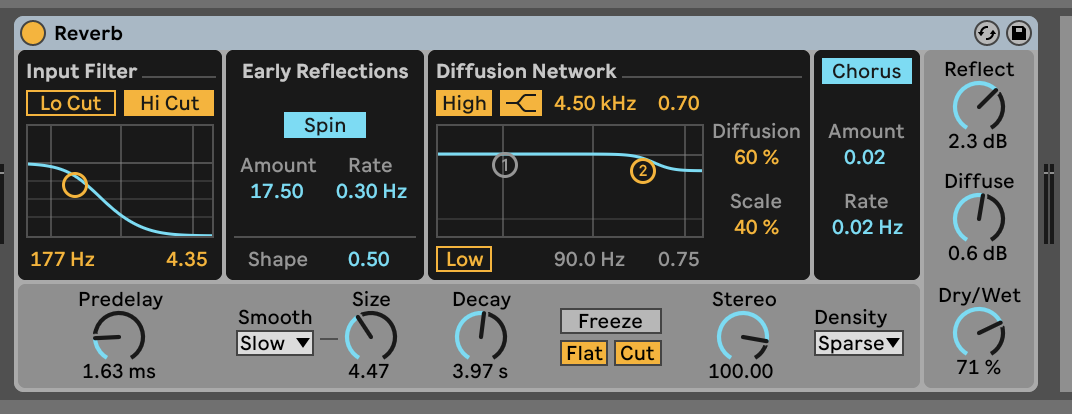
I initially applied Reverb to the kookaburra sample, setting the decay to 3.97 seconds, Dry/Wet to 71% and stereo width to 100%. These settings introduced an extended reverberant tail, allowing me to explore how artificial reflections could alter the perceived acoustic environment of an isolated natural sound.
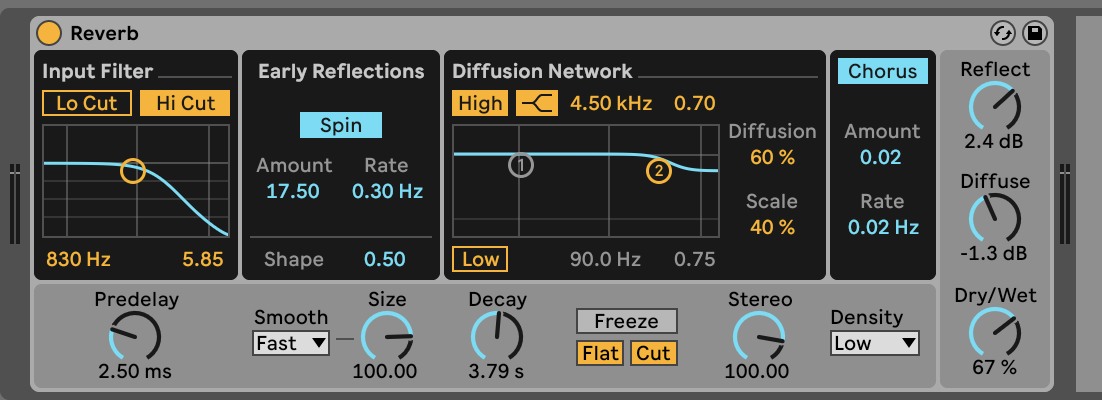
I then applied Reverb to the forest ambience, increasing the Size parameter to 100, with a decay of 3.79 seconds and Dry/Wet at 67%. Unlike the isolated kookaburra call, the forest recording contained multiple overlapping environmental sounds. This allowed me to investigate how reverberation could influence the spatial characteristics of an existing soundscape.
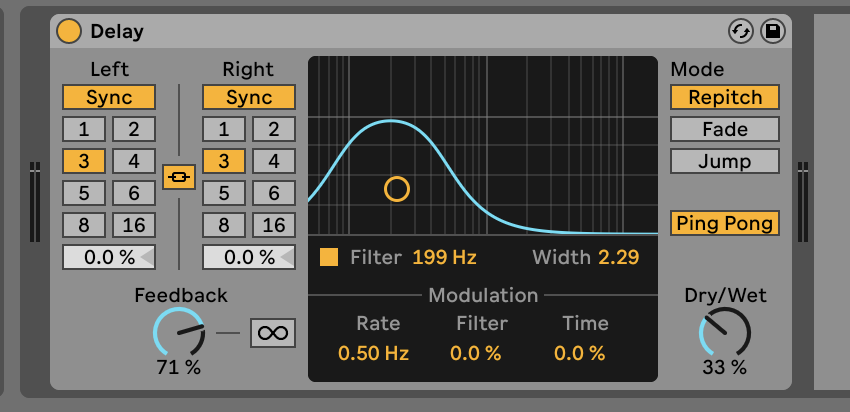
For the rocky stream recording, I experimented with Delay, enabling Ping Pong mode with 71% feedback and 33% Dry/Wet. This introduced repeated signals alternating between stereo channels, creating temporal layering and potential spatial movement within the continuous water recording.
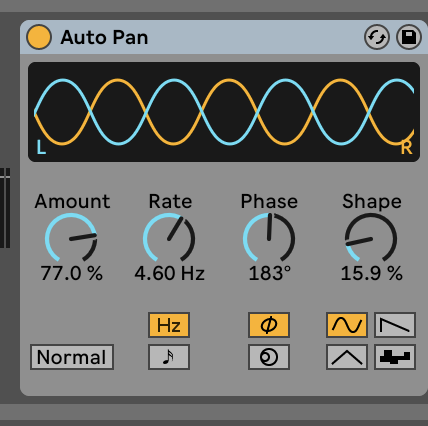
Finally, I applied Auto Pan to the organic percussion sample, using an Amount of 77%, Rate of 4.60 Hz and Phase of 183°. This introduced rapid, cyclical stereo modulation, adding rhythmic movement to the percussion.
After experimenting with each effect, I combined all four processed samples into a single composition. Layering the recordings allowed me to explore how different spatial and temporal treatments interacted within a shared sonic environment.
The completed soundscape demonstrated how individual processing techniques could be combined to create a more complex spatial composition from relatively simple source material.
Conclusion and Reflection
This investigation strengthened my understanding of how relatively simple audio-processing techniques can manipulate the perception of space and time within a composition.
By applying different effects to natural and organic recordings, I explored how reverberation, delay and automated panning could influence the spatial characteristics of individual sounds. Combining these processed recordings into one soundscape also demonstrated how different techniques could contribute to a shared acoustic environment.
One of the most interesting aspects of the investigation was the contrast between the original natural recordings and their digitally manipulated versions. Although the samples originated from recognisable environments, the processing introduced artificial spatial characteristics that extended beyond their original acoustic contexts.
The experiment also highlighted the distinction between creating realistic spatial environments and using spatial processing as an expressive compositional technique. Rather than attempting to reproduce an authentic natural environment, I explored how exaggerated reverberation, repetition and movement could contribute to a more experimental soundscape.
Overall, the investigation reinforced the importance of considering space and time as active creative elements rather than simply technical aspects of mixing.
It also demonstrated that meaningful experimentation does not necessarily require complex technologies. Accessible tools within Ableton Live provided opportunities to explore spatial perception and develop my understanding of immersive audio production.
References
Ableton. (n.d.). Live audio effect reference. Ableton Live manual.
Blauert, J. (1997). Spatial hearing: The psychophysics of human sound localization (Rev. ed.). MIT Press.
Blesser, B., & Salter, L.-R. (2007). Spaces speak, are you listening? Experiencing aural architecture. MIT Press.
Rumsey, F. (2012). Spatial audio. Focal Press.
Kookaburra Sample Processing
Forest Sounds Sample Processing
Rocky Stream Sample Processing
Organic Percussion Sample Processing
Investigation 4: Breaking the Rules
Research Question: How can deliberately degrading natural sound recordings through extreme digital processing challenge conventional audio production practices and generate unexpected sonic textures?
Proposal
This investigation explores how unconventional digital audio processing can challenge established production practices and generate unexpected sonic textures. Using Ableton Live 11 Standard, the investigation focuses on deliberately degrading a natural water stream and droplet recording through extreme manipulation of the Redux audio effect.
Conventional audio production frequently prioritises clarity, fidelity and the minimisation of unwanted distortion. However, experimental sound design challenges these conventions by treating technical imperfections as potential creative resources. This investigation aims to examine how intentionally compromising audio quality can transform recognisable environmental recordings into unfamiliar sounds.
The primary objective is to investigate the creative possibilities of bit reduction and downsampling, two digital processing techniques that reduce the resolution of audio signals. Rather than using these techniques for subtle coloration, the experiment deliberately pushes their parameters towards extreme settings to explore their transformative potential.
The investigation hypothesises that excessive digital degradation can produce unexpected sonic characteristics that fundamentally alter the perceived identity of the original recording. Specifically, manipulating a water recording may generate textures resembling unrelated environmental sounds, demonstrating how digital processing can challenge the relationship between a sound's physical source and its perceived identity.
This approach encourages experimentation beyond conventional production expectations, prioritising discovery over technical perfection. Through practical experimentation, academic research and critical reflection, the investigation seeks to establish whether deliberately introducing digital imperfections can expand creative possibilities within contemporary sound design. Ultimately, the project examines how breaking established production conventions can contribute to innovative approaches to audio manipulation and creative practice.
Research
The creative potential of unconventional audio processing can be understood through research into experimental music, noise aesthetics and digital imperfections.
Cascone (2000), in The Aesthetics of Failure, examines how technological errors and digital artefacts have become significant creative elements within contemporary electronic music. Rather than treating glitches, distortion and processing imperfections as undesirable outcomes, Cascone identifies their potential as artistic materials. This perspective directly informs the investigation, which deliberately introduces digital degradation to transform an ordinary environmental recording into an unfamiliar sonic texture.
Historically, Russolo (1913) challenged established musical conventions through his manifesto The Art of Noises. Russolo argued that traditional musical practices restricted the range of sounds considered artistically valuable, advocating for the incorporation of noise into musical composition. His ideas provide historical context for contemporary experimental sound design, where unconventional sonic materials can challenge expectations surrounding musicality and aesthetic value.
More recently, Cascone and Jandrić (2021) revisit postdigital aesthetics and critically examine the relationship between technological failure, artistic experimentation and creative practice. Their discussion suggests that the artistic significance of technological imperfections depends on how they are understood and incorporated into creative work.
Technical research into Ableton's Redux effect further supports the investigation. Ableton (n.d.) explains that Redux uses downsampling and bit reduction to introduce distortion, noise and digital artefacts. These processes provide a practical method for investigating how reducing audio fidelity can produce new sonic characteristics.
Collectively, these sources establish that breaking technical conventions is not necessarily an indication of poor production practice. Instead, deliberate experimentation with imperfections can challenge established aesthetic expectations and generate alternative approaches to sound design.
Process
The practical investigation was conducted using Ableton Live 11 Standard and a pre-existing audio sample featuring flowing water and individual droplets. The recording was selected because its recognisable environmental characteristics provided a clear reference for evaluating how extreme processing could alter its sonic identity.
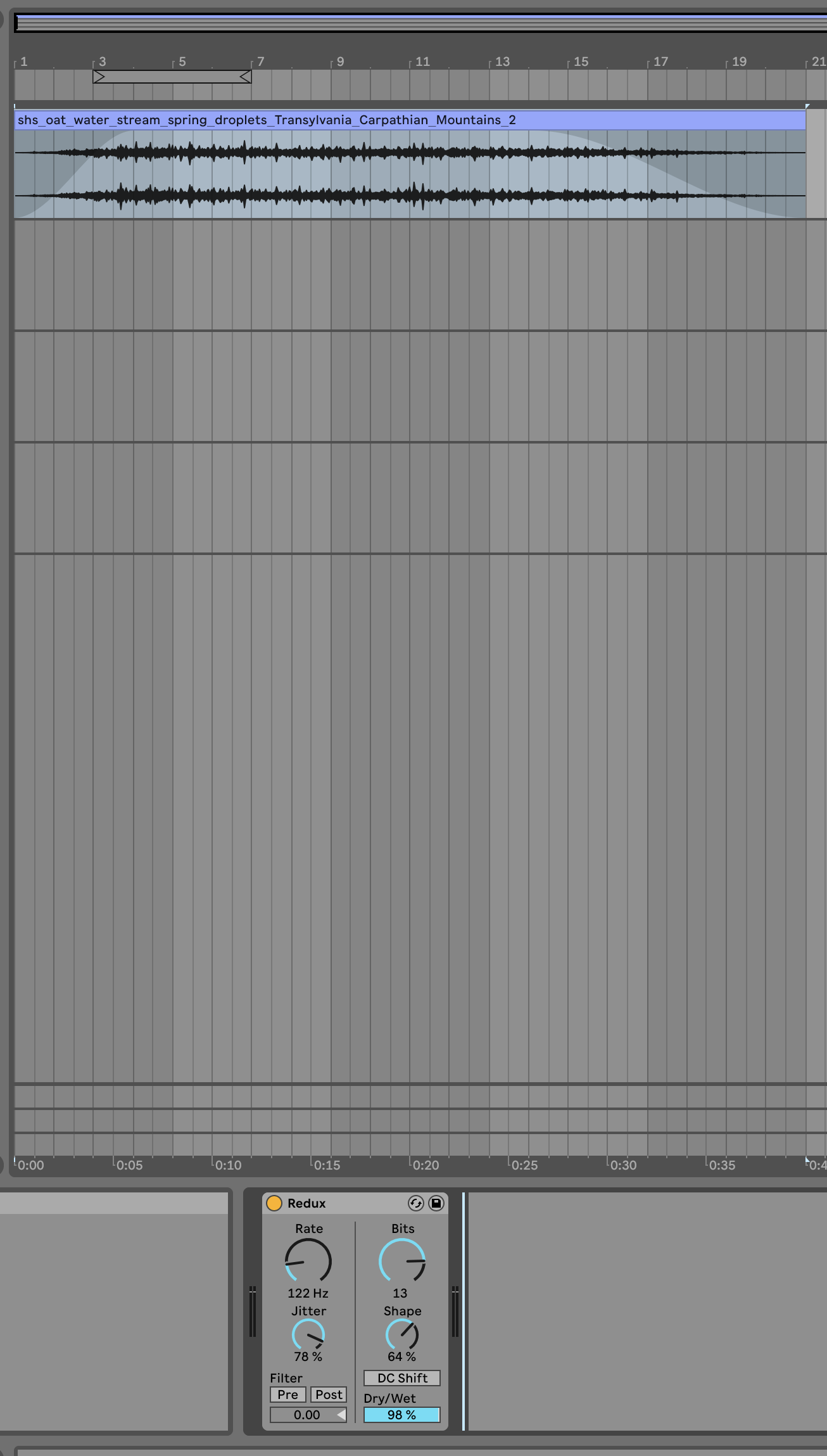
I imported the sample into Ableton and applied the Redux audio effect, experimenting with bit reduction and downsampling to deliberately degrade the recording. Rather than preserving the natural characteristics of the water, I pushed the processing towards extreme settings to investigate how digital imperfections could generate unexpected sonic textures.
The most successful outcome was the transformation of the water recording into a harsh, crackling texture resembling static or burning fire. This was particularly interesting because the processed sound no longer clearly communicated its original source. The experiment demonstrated how a relatively simple processing technique could produce an entirely different perceived sonic identity.
However, the experiment also revealed limitations. As the degradation increased, the original characteristics of the water became increasingly difficult to distinguish. Although this was consistent with the investigation's objectives, it highlighted the trade-off between creating unfamiliar textures and retaining recognisable source material. The resulting harshness also raised questions about whether extreme processing would be appropriate in every compositional context.
One important discovery was that the creative value of distortion depended on how the resulting sound was interpreted. Rather than evaluating the processing according to conventional standards of fidelity, I considered whether the altered recording offered new creative possibilities.
This approach encouraged a more experimental relationship with audio technology, where unexpected results became opportunities for creative exploration rather than problems requiring correction. The process demonstrated that breaking conventional production rules does not necessarily require complex techniques, but can emerge through deliberately unconventional applications of familiar tools.
Conclusion and Reflection
This investigation demonstrated how deliberately challenging conventional audio production practices can generate unexpected sonic outcomes. Through extreme digital degradation, a natural water recording was transformed into a texture resembling static or crackling fire, supporting the hypothesis that unconventional processing can fundamentally alter a sound's perceived identity.
These findings align with Cascone's (2000) concept of the aesthetics of failure, which recognises digital imperfections as potential artistic resources. The distortion introduced through Redux, traditionally associated with reduced audio fidelity, became the defining creative characteristic of the processed recording. Similarly, Russolo's (1913) argument for expanding musical expression beyond conventional sounds provides historical context for treating noise as legitimate creative material.
The experiment also highlighted limitations. Although extreme processing produced an unexpected texture, it reduced the recognisability of the original recording and introduced harsh sonic characteristics. This reinforced the importance of balancing experimentation with intentional creative decision-making.
Reflecting on the process, I recognised that breaking production conventions is not inherently innovative; its creative value depends on how unconventional outcomes are interpreted and applied. The investigation encouraged me to approach technical imperfections with greater curiosity and consider their potential within future soundscape compositions, particularly when developing unfamiliar environmental textures.
References
Ableton. (n.d.). Live audio effect reference. In Ableton reference manual version 11.
Cascone, K. (2000). The aesthetics of failure: “Post-digital” tendencies in contemporary computer music. Computer Music Journal, 24(4), 12–18.
Cascone, K., & Jandrić, P. (2021). The failure of failure: Postdigital aesthetics against techno-mystification. Postdigital Science and Education, 3, 566–574.
Russolo, L. (1913). L'arte dei rumori: Manifesto futurista [The art of noises: Futurist manifesto]. Direzione del Movimento Futurista.
Investigation 5: Storytelling Through Audio
Research Question:
Proposal
Th
Research
The
Process
The
Conclusion and Reflection
This
References
Able