Fashioning Professionals: Identity and Representation at Work in the Creative Industries
In the introduction to Fashioning Professionals: Identity and Representation at Work in the Creative Industries, Armstrong and McDowell (2018) argue that professional identity within the creative industries is not a fixed characteristic but an ongoing social process. Rather than viewing the creative professional as someone defined solely by their occupation or technical skill, the authors suggest that professional identities are continually constructed, negotiated, and represented through media, public institutions, professional organisations, and everyday cultural practices. Creative professionals therefore do not simply have an identity; they actively fashion one through their work, appearance, relationships, and public representation.
The introduction also explores how changing economic, technological, and cultural conditions have reshaped what it means to work within the creative industries. Emerging professions such as bloggers, makers, curators, and digital creatives demonstrate that creative identities are continually evolving rather than remaining tied to traditional artistic roles. Armstrong and McDowell position these identities as forms of performance that are influenced by questions of labour, style, gender, taste, and cultural representation, highlighting the ongoing negotiation between individual self-representation and broader social expectations.
Reflection
This reading prompted me to reconsider what it actually means to be a creative professional. Until now, I have largely thought of professional identity as something achieved through qualifications, technical competence, or employment. Armstrong and McDowell (2018), however, suggest that professional identity is not something that is earned once and then permanently possessed. Instead, it is continually performed, negotiated, and reconstructed through the ways creative practitioners present themselves and interact with audiences, institutions, and industries. I found this perspective particularly relevant because I am currently in the process of defining my own creative identity rather than simply preparing for a predetermined career.
Throughout my studies, I have often struggled with how to describe my practice because it does not fit neatly within a single discipline. Depending on the context, I could describe myself as an audio practitioner, music producer, creative director, researcher, installation artist, entrepreneur, or wellness practitioner. Previously, I viewed this uncertainty as a weakness, believing that I needed to settle on one professional identity before establishing myself within the creative industries. This reading challenged that assumption by presenting identity itself as something fluid and continually "fashioned" rather than fixed (Armstrong & McDowell, 2018). Rather than trying to simplify my practice into a single label, I am beginning to see value in embracing its interdisciplinary nature.
The discussion of self-fashioning also encouraged me to think critically about the role of representation in contemporary creative practice. In today's digital landscape, professional identity extends well beyond the creative work itself. Websites, social media, artist statements, portfolios, interviews, and public presentations all contribute to how practitioners are understood by others. This resonates strongly with my own aspirations of building a practice that exists across artistic, academic, and commercial contexts. Increasingly, I recognise that communicating my ideas is not separate from my creative practice but forms part of it. The ways I present myself inevitably influence how my work is interpreted and the opportunities that become available.
At the same time, the reading encouraged me to question the pressures that accompany this process of self-fashioning. If professional identity is continually performed, there is also the possibility that creatives begin constructing identities based on what industries, audiences, or algorithms reward rather than what genuinely reflects their practice. This tension feels increasingly relevant within social media cultures, where visibility often depends upon maintaining a consistent and recognisable personal brand. As someone interested in authenticity and human experience, I find myself questioning how creative practitioners can remain adaptable without allowing external expectations to determine the direction of their work.
Ultimately, this reading has shifted my understanding of professional identity from something I need to discover to something I will continually develop throughout my career. Rather than asking, "What am I?", I am beginning to ask, "How am I choosing to represent my practice, and why?" This subtle shift feels significant because it places identity within an ongoing process of reflection, experimentation, and growth. It also reinforces the idea that creative practice is not only expressed through the work we produce but through the relationships we build, the communities we participate in, and the narratives we construct about ourselves as creative professionals.
Reference
Armstrong, L., & McDowell, F. (2018). Introduction: Fashioning professionals: History, theory and method. In L. Armstrong & F. McDowell (Eds.), Fashioning professionals: Identity and representation at work in the creative industries (pp. 1–25). Bloomsbury Academic.
Research Library
This research library documents the ideas, theories, and evidence informing Lhasa Cue’s evolving creative practice. It brings together writing on sound, listening, human experience, environmental perception, wellbeing, and interdisciplinary creative practice. The collection will continue to grow throughout her postgraduate studies.
Soundscape Ecology: The Science of Sound in the Landscape
Gage, S. H., & Pieretti, N. (2011)
This article introduces soundscape ecology, a field that studies landscapes through sound rather than sight alone. It explains how environmental sound is made up of biophony (animals), geophony (natural elements such as wind and rain), and anthrophony (human activity). Together these sound sources reveal ecological relationships and the health of an environment.
This paper provides a scientific foundation for my work with field recording and immersive sound. It reinforces the idea that listening is a way of understanding place and supports my interest in creating experiences that reconnect people with their environments through sound.
Gage, S. H., & Pieretti, N. (2011). Soundscape ecology: The science of sound in the landscape. BioScience, 61(3), 203–216.
Deep Listening
Pauline Oliveros (2005)
In Deep Listening, composer Pauline Oliveros presents listening as an intentional practice rather than a passive act. Through philosophy, reflection, and practical exercises, she encourages expanded awareness of sound, space, memory and human connection, demonstrating how attentive listening can transform the way people experience themselves and their surroundings.
Oliveros’ work has shaped the way I think about listening as both a creative methodology and a form of inquiry. Her approach encourages me to create immersive experiences that invite presence, curiosity, and deeper engagement with the environments people inhabit, rather than simply producing sound for aesthetic affect.
Oliveros, P. (2005). Deep listening: A composer's sound practice. iUniverse.
The Psychological Implication of Soundscape: A Systematic Review of Empirical Literature and a Research Agenda
Erfanian, M., Mitchell, A. J., Kang, J., & Aletta, F. (2019)
This systematic review brings together decades of research exploring how acoustic environments influence psychological and physiological wellbeing. It examines how different soundscapes affects stress, mood, attention, and emotional responses, while also identifying gaps in current research and opportunities for future interdisciplinary study.
This paper reinforces my interest in designing experiences that place human perception at the centre of creative practice. Rather than viewing sound as purely aesthetic, it demonstrates how environments can shape the way people feel, think, and interact with the world around them. It also encourages me to approach immersive sound through both artistic exploration and evidence-informed research.
Erfanian, M., Mitchell, A. J., Kang, J., & Aletta, F. (2019). The psychophysiological implications of soundscape: A systematic review of empirical literature and a research agenda. International Journal of Environmental Research and Public Health, 16(19), 3533.
Acoustic Communication
Barry Truax (2001)
Barry Truax explores the role of sound as a fundamental form of communication between people and their environments. He argues that listening is an active process through which individuals interpret place, culture, and social relationships, introducing concepts that have become foundational within soundscape studies and acoustic ecology.
This book provides a theoretical framework for understanding sound as more than a creative medium. It has influenced my thinking about how immersive sound can communicate meaning, shape perception, and strengthen people’s relationship with palce. Truax’s work continues to inform the development of my practice as both an artist and a researcher.
Truax, B. (2001). Acoustic communication (2nd ed.). Ablex Publishing.



Between Places (Bricolage)
Every environment carries a rhythm before people begin to name it.
The forest breathes in layers. Leaves brush against one another in irregular patterns while distant birds punctuate the space with calls that rise and disappear without warning. Wind moves through the canopy as though the landscape itself were inhaling, creating a rhythm that is never repeated in exactly the same way. Nearby, water folds over stone before dissolving back into a quieter current, briefly interrupting the surrounding textures before becoming part of them once again.
The railway platform exists within a different acoustic ecology. Fluorescent lights emit an almost imperceptible electrical hum while footsteps echo across concrete surfaces before disappearing into open space. Mechanical announcements drift through the station, momentarily drawing attention before fading into the background. The platform is characterised not by silence but by anticipation; its sounds suggest movement, arrival, departure, and the continual transition of people through space.
Placed together, these environments challenge the assumption that nature and the built environment exist as acoustic opposites. Instead, each landscape possesses its own sonic identity, composed of rhythms, textures, and temporal patterns that shape how it is experienced. The work does not seek to privilege one environment over another but instead encourages a slower form of attention in which listening becomes a way of recognising the subtle qualities that define place. Rather than asking the audience to compare locations visually, Between Places proposes that environments may be understood through the relationships between sound, movement, memory, and perception.
Reflection
Before undertaking this exercise, I associated originality with producing entirely new ideas. The process of bowerbirding challenged that assumption by demonstrating that creativity can emerge through the careful selection, arrangement, and reinterpretation of existing materials. Rather than inventing new images or narratives, I began with fragments that already existed independently of one another and discovered that meaning emerged through the relationships established between them. This aligns with Brady's (2000) discussion of the bowerbird as a metaphor for creative practice, where originality is found not in creating material from nothing but in the thoughtful curation and recombination of diverse influences.
What interested me most was how the images changed when they were considered collectively rather than individually. A photograph of a forest initially communicated ideas of nature and stillness, while the railway platform suggested movement and urban infrastructure. However, once they were placed together, these familiar categories became less stable. I found myself paying less attention to what the images depicted visually and more attention to the sounds they implied. The creative work gradually shifted away from being a collection of photographs and became an exploration of listening itself. This reflected Brady's (2000) argument that descriptive prose can extend beyond describing objects to evoke relationships, sensations, and experiences that are not immediately visible.
The railway platform became particularly significant throughout this process. Initially, I selected it because it contrasted visually with the natural environments. As I continued, however, I realised that the platform represented something more complex than urban space. It became a site of anticipation, transition, and possibility, where sound continually communicates movement before it becomes visible. The echoes of footsteps, distant mechanical announcements, and electrical hums contribute to an atmosphere that many people recognise intuitively yet rarely stop to examine. This shifted my attention away from the visual appearance of the station and towards the role that sound plays in shaping emotional and spatial experience.
This process also caused me to reflect on the assumptions I bring to my own creative practice. I often approach sound as the primary medium through which I investigate human experience, yet I realised that I frequently begin by thinking visually. Bowerbirding encouraged me to reverse that process. Rather than asking what these environments looked like, I asked what they sounded like and how those sounds might influence memory, emotion, and perception. In doing so, I found myself engaging with places less as physical locations and more as acoustic environments, each with its own rhythm, texture, and identity.
The exercise also reinforced the idea that creative practice can function as a form of inquiry rather than simply a process of expression. By collecting existing materials and reflecting upon the meanings that emerged between them, I was not illustrating an idea I already understood but investigating a question that developed throughout the creative process itself. This reflects Brady's (2000) argument that reflection is not separate from making but forms part of the creative methodology, allowing practitioners to articulate how knowledge emerges through practice.
Looking back, I recognise that Between Places is ultimately less concerned with landscapes than with attention. The work asks what becomes visible—or perhaps more accurately, what becomes audible—when we pause long enough to notice the acoustic identities of places we ordinarily move through without reflection. This resonates with my developing creative practice, which investigates how listening shapes relationships between people and their environments. Rather than positioning sound as simply another artistic medium, I am increasingly interested in listening as a way of understanding place and generating knowledge through creative practice.
More broadly, this exercise has changed my understanding of remixing. Prior to this activity, I largely associated remix with adaptation or reproduction. Through the process of bricolage, I came to appreciate that remixing can instead become a method of research. Existing materials are not merely copied but recontextualised, allowing new questions and meanings to emerge through juxtaposition. Creativity therefore becomes less about pursuing complete originality and more about recognising previously unseen relationships between ideas. In this sense, bricolage is not simply a creative technique but a methodology for inquiry, where the act of arranging existing fragments generates knowledge that did not exist within any single component alone (Brady, 2000).
References
Brady, T. (2000). A question of genre: De-mystifying the exegesis.
Creative Practice Reflection
Before beginning postgraduate study, I understood research primarily as the process of gathering evidence before making something. Whether producing music, designing immersive experiences, or writing academically, I saw research as an activity that occurred before the work began. Research involved reviewing literature, analysing existing work, and developing enough understanding to justify creative decisions. This week’s material challenged that assumption by presenting research not simply as information gathering, but as a process that produces knowledge (Stokes, 2013). More importantly, it suggested that different disciplines produce knowledge through different methodologies and that creative practice itself can function as a legitimate form of research.
Initially, I found this idea difficult to reconcile with my existing understanding of evidence. Much of my own practice has been informed by scientific literature surrounding neuroscience, psychology and soundscape research because I have often viewed empirical evidence as the strongest form of knowledge. However, Lyotard’s (1984) distinction between scientific knowledge and narrative knowledge encouraged me to reconsider that hierarchy. Rather than suggesting that one form of knowledge is superior, he argues that different forms of knowledge operate according to different rules and fulfil different social purposes. This prompted me to recognise that while scientific research may explain how humans perceive sound physiologically, creative practice explores dimensions of listening that are equally important but less easily quantified, including atmosphere, memory, identity, emotion and meaning.
Reflecting on my own practice, I realised that my understanding of sound has never been developed through a single source of knowledge. Technical expertise has emerged through years of learning recording techniques, mixing spatial audio, and sound design. At the same time, my interest in the relationship between sound and wellbeing did not originate in an academic journal but through lived experience. Those experiences motivated me to seek scientific literature, yet they also continue to shape the questions I ask as a creative practitioner. Stokes (2013) argues that knowledge is produced through multiple cultural systems rather than through scientific inquiry alone. Looking back, my own practice has always drawn upon technical knowledge, embodied experience, philosophical reflection, and academic research simultaneously, even if I had previously valued one form over another.
Brady’s (2000) discussion of the bowerbird metaphor also shifted the way I think about originality. Rather than presenting creativity as the invention of entirely new ideas, she describes creative practice as a process of collecting, arranging, and transforming existing materials into new forms of meaning. I recognised this immediately within my own work. My creative process rarely begins with a completely original concept; instead, it develops through the gradual accumulation of journal articles, books, environmental recordings, conversations, artworks, and personal observations. The originality does not lie within the individual components themselves but in the relationships that emerge when they are brought together. This understanding also reframes research as an ongoing process of collection, interpretation, and synthesis rather than a preliminary stage that ends before making begins.
This week’s discussion also caused me to reconsider the purpose of reflection itself. Previously, I viewed reflective writing as a requirement that followed the completion of creative work—a way of explaining decisions that had already been made. Brady (2000), however, positions exegesis as an extension of creative practice rather than a separate academic exercise. This resonates strongly with my own developing methodology. Reflection provides the opportunity to identify patterns that remain invisible during the act of making, allowing intuitive decisions to become explicit forms of knowledge. Rather than simply documenting my creative process, reflection actively contributes to it by revealing relationships, assumptions, and discoveries that influence future work.
I was also reminded of Csikszentmihalyi's (1999) systems model of creativity. Creativity does not emerge in isolation but through the interaction between an individual, a cultural domain of existing knowledge, and the communities that evaluate and develop new ideas. This perspective reinforces the importance of engaging critically with existing literature while recognising that creative practitioners also contribute to that evolving body of knowledge. My role is not simply to consume research produced by others, but to participate in an ongoing conversation through both creative practice and critical reflection.
Moving forward, I hope to become more intentional in documenting the knowledge that emerges through making rather than treating creativity and research as separate activities. My practice increasingly sits at the intersection of sound, environment, and human experience, where technical, philosophical, ethical, and emotional forms of knowledge continually intersect. This week's material has encouraged me to see that the value of my work lies not only in the experiences it creates, but also in the questions it investigates and the understandings it produces. In this sense, creative practice is not simply informed by research; it is capable of becoming research itself.
References
Brady, T. (2000). A question of genre: De-mystifying the exegesis.
Csikszentmihalyi, M. (1999). Implications of a systems perspective for the study of creativity. In R. J. Sternberg (Ed.), Handbook of creativity (pp. 313–335). Cambridge University Press.
Lyotard, J.-F. (1984). The postmodern condition: A report on knowledge (G. Bennington & B. Massumi, Trans.). Manchester University Press. (Original work published 1979)
Stokes, J. C. (2013). How to do media and cultural studies. SAGE.
Threshold is a speculative immersive installation that explores how listening shapes our relationship with place. Combining multichannel environmental recordings, spatial sound, subtle lighting, and natural materials, the work invites audiences to slow their attention and reconsider the acoustic environments they move through every day. Rather than presenting sound as background, the installation positions listening as an active way of perceiving and understanding the world.
The work investigates the idea that every environment possesses an acoustic identity capable of communicating histories, relationships, and emotional qualities that often remain unnoticed. By layering recordings from forests, waterways, urban infrastructure, and transitional spaces, Threshold blurs the distinction between natural and built environments, encouraging audiences to recognise the interconnectedness of these sonic worlds. The installation asks how attention changes when listening becomes intentional rather than automatic.
Rather then offering a fixed narrative, Threshold creates an open sensory experience in which meaning is constructed through each visitor’s own memories, associations, and perceptions. Moments of familiarity and uncertainty are allowed to coexist, reflecting the ways people continually negotiate their relationship with place through lived experience. The work proposes that listening is not simply a sensory process but a form of inquiry capable of revealing overlooked dimensions of everyday life.
Drawing upon soundscape ecology, environmental psychology, and contemporary sound art, the installation exists between artistic practice and research. It investigates how immersive sound environments influence perception while questioning how creative practice can generate new ways of understanding human experience. Through the careful arrangement of environmental sound, space, and atmosphere, Threshold invites audiences to consider listening not as passive reception but as an active practice of attention.
Threshold.
The Concept
The work consists of a small, dimly lit room containing three suspended speakers positioned in a triangular formation. Each speaker emits recordings from a different environment: a flowing creek, a dense eucalyptus forest, and an empty railway platform before dawn. The recordings gradually overlap, fade, and exchange spatial positions, making it difficult to distinguish where one environment ends and another begins.
The floor is covered with fallen leaves, smooth river stones, and reclaimed timber, encouraging visitors to move slowly and become aware of the relationship between movement, texture, and sound. A single bench sits in the centre of the space, inviting extended listening rather than interaction.
Projected onto one wall is a slow-moving spectrogram generated from the live audio within the installation. The visualisation provides a scientific representation of the sound without translating or explaining it, reinforcing the relationship between artistic perception and empirical observation.
There is no beginning or end to the installation. Visitors may enter and leave at any time, allowing the work to unfold differently with every encounter. The installation offers no explicit explanation, encouraging audiences to construct meaning through attentive listening and their own embodied experience.
Reflection
Although Threshold exists as a speculative proposal rather than a realised installation, developing the concept challenged the way I think about immersive experiences. My initial instinct was to design an installation that communicated a particular message about nature, wellbeing, or environmental awareness. As the concept evolved, however, I became increasingly interested in creating conditions for exploration rather than directing interpretation. This shift reflects Eco's (1989) concept of the open work, where meaning is not predetermined by the artist but emerges through the audience's participation and interpretation.
Rather than constructing a linear narrative, I intentionally designed the installation without a beginning, middle, or conclusion. Visitors are free to move throughout the space according to their own curiosity, pausing where particular sounds capture their attention or moving between environments at their own pace. This openness acknowledges that no two people will experience the installation in exactly the same way. A visitor who has grown up in rural environments may respond differently to birdsong than someone whose strongest memories are associated with public transport or urban infrastructure. In this sense, the installation does not attempt to produce a universal emotional response but instead creates opportunities for multiple interpretations to emerge through individual experience.
Developing this concept also encouraged me to think more critically about sound as a form of spatial communication. In many immersive artworks, sound functions primarily as atmosphere, supporting visual elements that remain the dominant mode of interpretation. Throughout this process, I deliberately reversed that hierarchy. Instead of asking how sound could reinforce an existing visual narrative, I asked how listening itself might become the primary way of understanding a space. This shift aligns with Oliveros' (2005) concept of Deep Listening, which positions listening not simply as hearing but as an intentional practice of attending to relationships between sound, environment, and human experience. While Threshold does not explicitly reference Oliveros within the installation, her work informed my understanding of listening as an active and embodied process rather than passive reception.
The concept also draws upon ideas from soundscape ecology, which understands environments as collections of interacting acoustic relationships rather than isolated sounds (Gage & Pieretti, 2011). As I developed the installation, I realised I was less interested in presenting recognisable recordings than in exploring how different sound environments communicate identity through their rhythms and textures. The forest, creek, and railway platform are therefore not intended to represent nature, water, or transport literally. Instead, they become acoustic signs that invite visitors to recall their own experiences of similar places. For one visitor, the railway platform may evoke excitement before travel; for another, it may recall separation, routine, or anxiety. Meaning is generated not by the recordings themselves but by the associations audiences bring to them.
This process also changed my understanding of immersive design. Initially, I thought immersion depended upon technological complexity—surround speakers, projection mapping, interactive systems, and carefully synchronised lighting. As the concept developed, I began to recognise that immersion is equally dependent upon attention. A simple environmental recording can become profoundly immersive if it encourages someone to listen differently. This realisation shifted my focus away from technological spectacle and towards the qualities of perception that the installation seeks to cultivate.
The speculative nature of Threshold proved valuable as a research method in itself. Although the installation has not been physically realised, the process of imagining its spatial relationships, audience interactions, and sensory experiences generated questions that I had not considered previously. How does movement alter listening? Can ambiguity encourage deeper engagement than explanation? At what point does an environment become meaningful through sound alone? These questions emerged through designing the work rather than existing beforehand, reinforcing the idea that creative practice functions as a process of inquiry rather than simply a method of presenting predetermined ideas (Brady, 2000).
Ultimately, Threshold represents an early exploration of the relationship between listening, perception, and place that I hope to continue developing throughout my Master's research. Rather than positioning sound as an object to be consumed, the work proposes listening as a way of understanding the environments we inhabit. The concept reflects my growing belief that creative practice can generate forms of knowledge that complement scientific research by investigating dimensions of human experience that are difficult to quantify but central to how people encounter the world.
References
Brady, T. (2000). A question of genre: De-mystifying the exegesis.
Eco, U. (1989). The open work (A. Cancogni, Trans.). Harvard University Press. (Original work published 1962).
Gage, S. H., & Pieretti, N. (2011). Soundscape ecology: The science of sound in the landscape. BioScience, 61(3), 203–216.
Oliveros, P. (2005). Deep listening: A composer's sound practice. iUniverse.
Habitus
Reading Bourdieu's concept of habitus fundamentally changed the way I think about my own creative practice. I have always considered my decision to pursue music and the creative industries to be a personal choice driven by curiosity and passion. However, Bourdieu (1984) argues that our tastes, values, and aspirations are never entirely individual; they are shaped by the social and cultural environments we inhabit from an early age. Looking back on my own life, I realise that becoming a musician and creative practitioner may have felt like an independent decision, but it was also the product of a cultural world in which creativity was normalised, encouraged, and deeply embedded within everyday life.
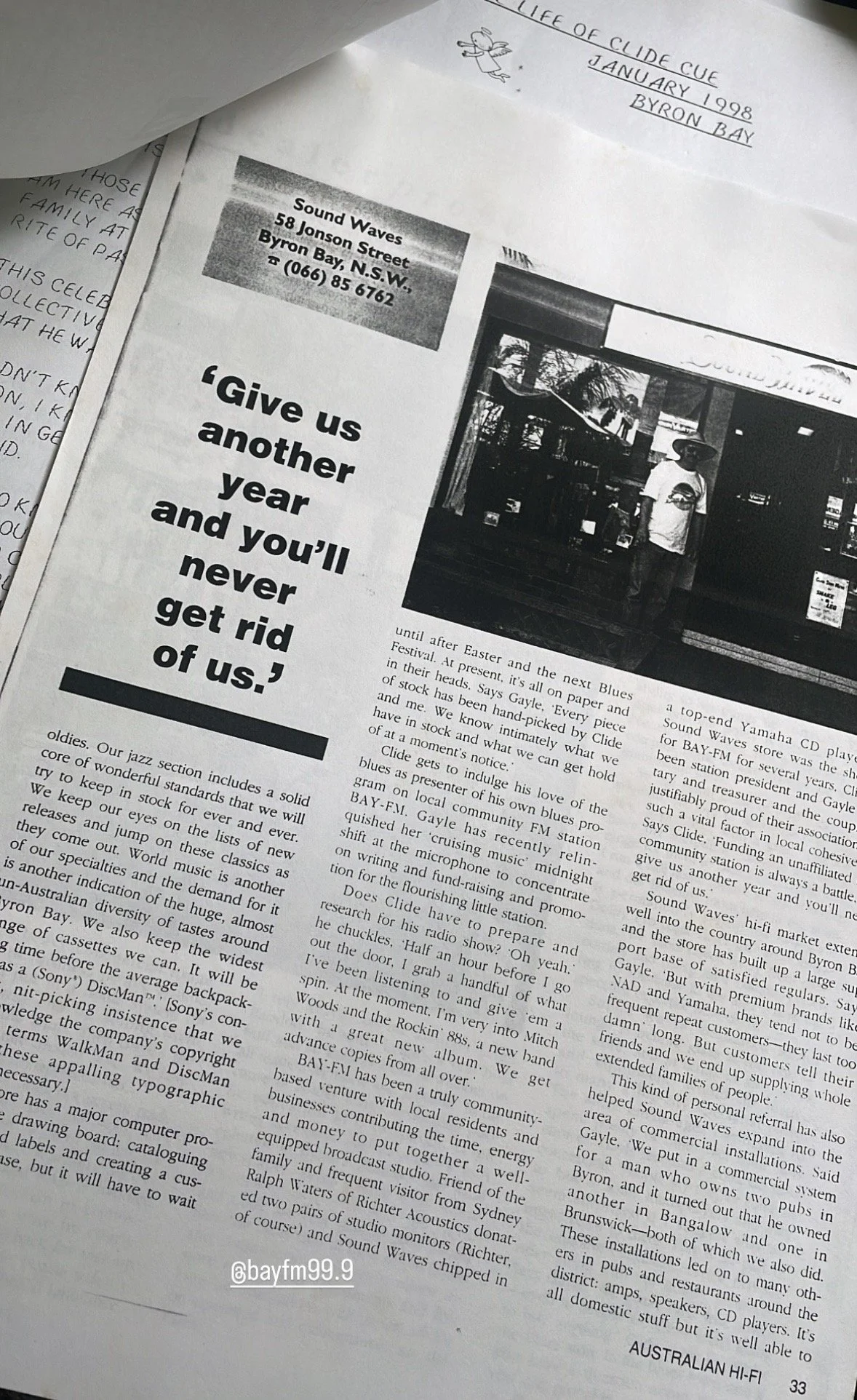
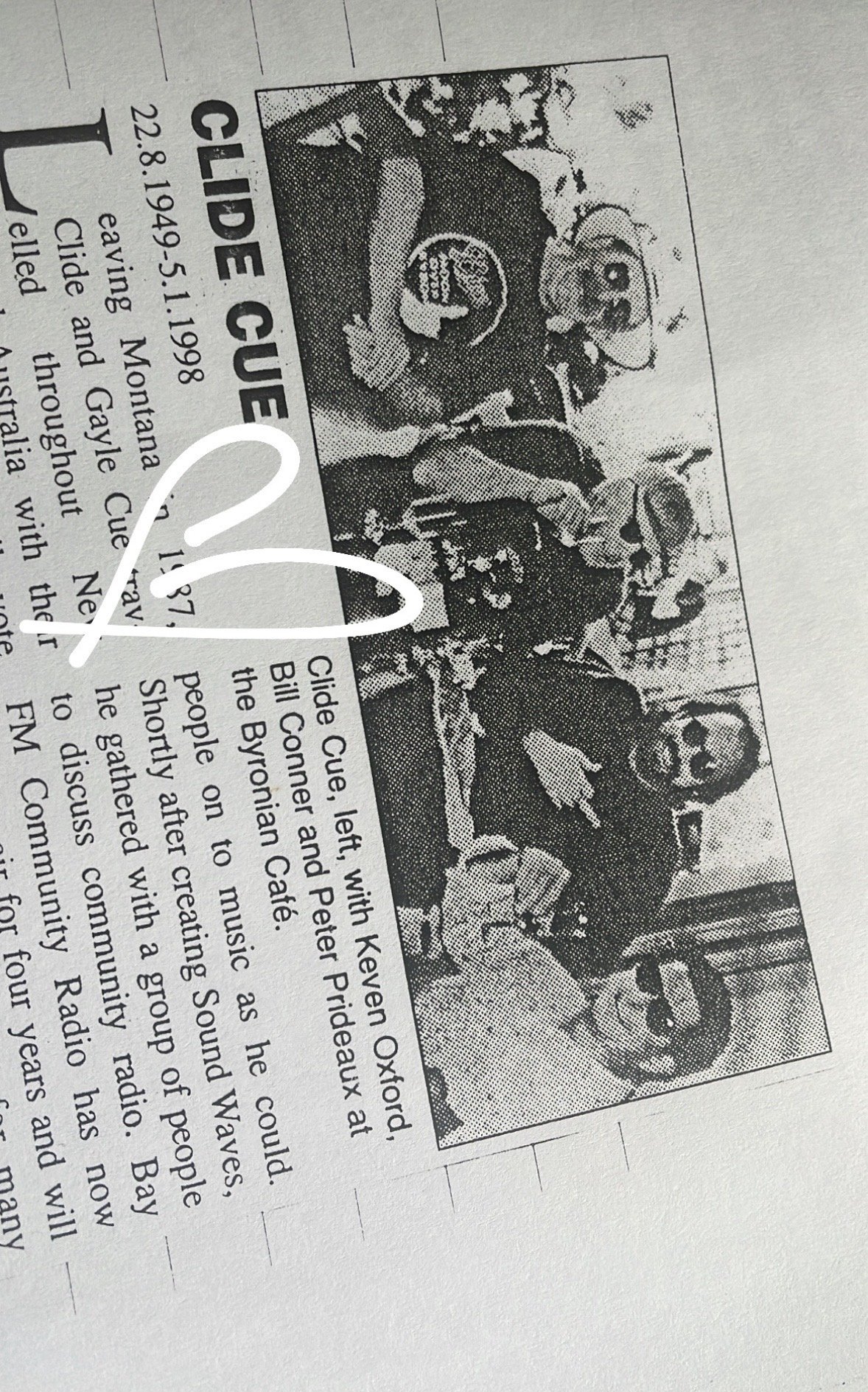
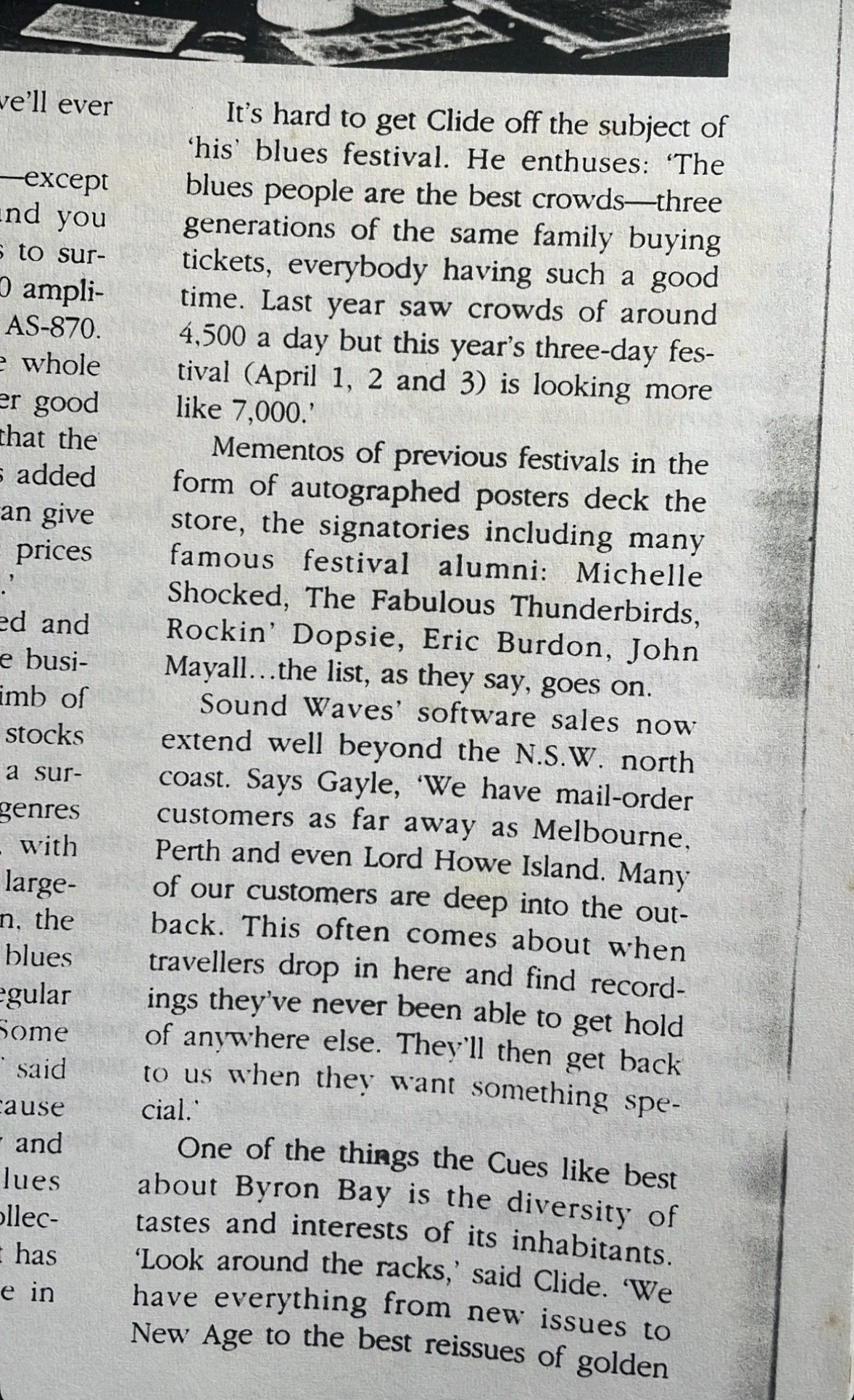
Music was never simply entertainment within my family; it was part of our identity and community. On my Father’s side of the family music has long been intertwined with everyday life. My grandfather, Clide Cue, played an important role in Byron Bay's early music culture. He was recognised within the local community as one of the early pioneers involved in establishing BayFM community radio, helping to develop its early sound production and broadcasting foundations while also running the music store Soundwaves, which became part of the region's creative landscape. In 1992, he also became an essential financial partner in the Byron Bay Blues Festival, providing the support needed to transform it from a small event into a multi-stage outdoor festival during its formative years. Although he passed away before I was born, his legacy remained present through family stories, the communities he helped build, and the generations of musicians and creatives who continued to surround my family.
Bourdieu (1984) describes habitus as the accumulation of dispositions that develop through repeated exposure to particular social worlds until they become embodied ways of thinking, feeling, and acting. Reflecting on my upbringing, I realise that music was never presented to me as a specialised profession or an unrealistic career path. It was simply what people around me did. Family friends were musicians, festival organisers, sound engineers, artists, and creative practitioners. Conversations about music, performance, recording, and festivals were ordinary parts of everyday life. I never questioned whether pursuing a creative career was possible because I had grown up seeing people build meaningful lives around creativity. What I once believed to be an individual decision now appears deeply connected to the cultural environment in which I was raised.
Growing up in Byron Bay further reinforced these dispositions. The town's culture of environmentalism, alternative lifestyles, community radio, spirituality, artistic experimentation, and independent music created an environment where creativity was not viewed as exceptional but as a legitimate way of engaging with the world. I attended music festivals and bush doofs from the age of two, surrounded by people who valued artistic expression, community, and alternative ways of living. Looking back, I recognise that I was immersed in a community of musicians and what many affectionately described as "starving artists." At the time, I never understood how unusual this environment was because it was simply my normal. Bourdieu's theory helped me realise that this normality was itself a product of habitus. The values, aspirations, and aesthetic preferences I absorbed through enculturation quietly shaped not only what I appreciated creatively but also what I imagined was possible for my own future.
At the same time, my habitus has continued to evolve. While my early experiences predisposed me towards music production, festivals, and live events, postgraduate study has introduced me to new intellectual traditions that have expanded the way I understand sound. Rather than viewing sound solely as artistic expression, I have become increasingly interested in listening as a form of inquiry, drawing upon fields such as soundscape ecology, neuroscience, environmental psychology, and philosophy. This reflects Bourdieu's (1984) suggestion that habitus is durable rather than deterministic. New experiences and participation within different social and educational fields can gradually reshape our dispositions while still carrying traces of the environments that first formed them.
Perhaps the most significant insight from this week's reading is that my creative practice did not emerge solely through talent or personal choice. It developed through a lifetime of cultural immersion in communities where music, festivals, broadcasting, storytelling, and artistic experimentation were everyday realities. Understanding habitus has allowed me to recognise that my creative identity is not simply an expression of individual taste, but the product of accumulated relationships, histories, and environments that continue to influence the questions I ask and the work I create today.
Reference
Bourdieu, P. (1984). Distinction: A social critique of the judgement of taste (R. Nice, Trans.). Harvard University Press. (Original work published 1979)
La Distinction (1979)
Pierre Bourdieu's La Distinction (1979) argues that aesthetic judgement is never entirely personal. Rather than reflecting innate qualities within an artwork, ideas of what is considered "good" or "bad" taste are shaped by culture, education, social class, and the communities we belong to. Taste therefore becomes a form of cultural capital that allows people to communicate identity and social status through their preferences.
Initially, I selected Rebecca Black's Friday (2011) as an example of something "objectively ugly." When it was released, the song became one of the most widely mocked pieces of popular music on the internet. Criticism focused on its repetitive lyrics, heavily processed vocals, simplistic production, and perceived lack of artistic sophistication. Public ridicule quickly became part of the song's identity, making it socially acceptable—even fashionable—to dislike it. From Bourdieu's perspective, this reaction illustrates how taste functions as a marker of distinction. Dismissing Friday became a way of signalling musical knowledge and cultural competence, positioning oneself as someone capable of recognising what was considered "good" music.
In contrast, I selected Madonna's La Isla Bonita (1986) as an example of something I perceive as beautiful. The song is often praised for its melodic composition, rich instrumentation, and evocative atmosphere. Its enduring popularity across generations has contributed to its status as a classic within popular music. Appreciating works that have achieved cultural longevity can also function as a form of distinction, communicating familiarity with recognised artistic achievements and shared cultural history.
However, Bourdieu also challenges the assumption that these judgements are objective. While I instinctively categorised one work as ugly and the other as beautiful, those responses have been shaped by my own cultural experiences and musical education. Someone encountering Friday without knowledge of its internet history may simply hear an uncomplicated pop song, while another listener may associate La Isla Bonita with nostalgia rather than artistic quality. Neither response exists independently of the social contexts in which they are formed.
This exercise therefore demonstrates that beauty and ugliness are not fixed properties contained within creative works themselves. Instead, they emerge through the cultural meanings attached to those works and the social groups that reinforce particular aesthetic values. Bourdieu's theory suggests that our preferences reveal as much about ourselves and the communities we belong to as they do about the music we are evaluating. Rather than asking whether one piece is objectively superior to another, La Distinction encourages us to question how our own ideas of taste have been shaped and what those preferences communicate about identity, culture, and belonging.

Read Me
Interactive text work, 2026
Read Me is an open text work exploring voice, trust, memory, and interpretation.
Critical Reflection: Read Me
Read Me was created as an open work that intentionally resists a singular interpretation. Rather than presenting a narrative, image, or explicit message, the work consists of a single sentence displayed in isolation: "Read this sentence in the voice you trust the least." By limiting the work to one simple instruction, the intention was to shift the focus away from the artwork itself and towards the audience's internal response. The work is therefore not completed by the artist but through the reader's participation, reflecting Eco's (1989) argument that an open work invites "a number of possible readings" rather than prescribing a fixed meaning (p. 84).
From a semiotic perspective, the sentence functions as a sign composed of several key signifiers. The most significant is the word "voice." At a denotative level, the word simply refers to the imagined sound of someone speaking. However, at the level of connotation, "voice" extends far beyond speech. Depending on the individual reader, it may evoke a parent, teacher, political figure, religious leader, former partner, employer, public personality, or even the reader's own internal monologue. Each possibility carries different emotional, cultural, and social associations, meaning the sign cannot be reduced to a single interpretation (Stokes, 2012).
The concept of "trust" similarly operates as an unstable sign. While trust commonly suggests reliability or safety, the instruction asks the audience to imagine the opposite by identifying the voice they trust the least. For some readers this may produce memories of personal relationships, while for others it may evoke institutions, media, or authority figures. The work therefore extends beyond individual psychology to invite broader ideological readings concerning power, credibility, and influence. As Stokes (2012) explains, semiotic analysis considers not only literal meanings but also the cultural myths and ideologies that signs can communicate.
Equally important is the deliberate absence of contextual information. The work provides no indication of who is speaking, why the sentence should be read, or whether there is a correct interpretation. This ambiguity was an intentional creative decision designed to maximise interpretive openness. Eco (1989) argues that open works operate as "a constellation" of elements that permit multiple reciprocal relationships between the work and its audience (p. 84). Rather than withholding meaning through incompleteness, Read Me creates meaning through indeterminacy. Every reader supplies their own voice, memories, experiences, and emotional associations, resulting in an artwork that changes with each encounter.
The website's minimal presentation further reinforces this openness. By removing imagery, colour, navigation, and explanatory text, the work avoids privileging one interpretive pathway over another. The surrounding white space functions semiotically as a sign of absence, encouraging readers to focus on their own cognitive and emotional responses rather than external visual cues. The artwork therefore exists less as a static object than as a moment of participation, where meaning emerges through the interaction between text and reader.
Ultimately, Read Me demonstrates Eco's concept of the open work by positioning interpretation as the artwork itself. The sentence remains identical for every audience member, yet the experience of reading it is necessarily different because each individual brings their own cultural background, relationships, memories, and understanding of trust. The work therefore rejects the notion of a singular authorial meaning and instead embraces interpretation as a collaborative process between artist and audience.
References
Eco, U. (1989). The open work (A. Cancogni, Trans.). Harvard University Press. (Original work published 1962)
Stokes, J. (2012). How to do media and cultural studies. SAGE Publications.